



Expert view – reporting on major incidents webinar
In this webinar, an expert panel discuss the work of journalists in reporting events where people may have been hurt or traumatised, where public services are stretched; and managing relationships between journalists, those caught up in incidents, and services such as the police
This IPSO webinar considered how the relationship between the police and press has changed since the Kerslake report, published in March 2018 following the May 2017 Manchester Arena attack. One of the report’s recommendations tasked IPSO with producing and publishing guidance on reporting major incidents.
Chaired by Andy Brennan QPM – former member of the IPSO Complaints Committee and deputy director of the National Crime Agency – the panel talked about reporting of major incidents which can include political unrest, criminal or terror attacks, and natural disasters.
Our expert panel:
- Eoin Brannigan, Editor-in-Chief, Belfast Telegraph and Sunday Life
- Beth Durham, Professional Standards Manager (media and communications), College of Policing
- Ros Ereira, Campaigner, Survivors Against Terror
- Sarah Lester, Editor, Manchester Evening News
- Alan Woods, Head of Media and Public Affairs, National Police Chiefs’ Council
The editor of the Manchester Evening News (MEN), Sarah Lester, explained that the Kerslake Report had praised the reporting of the MEN in contrast to its criticisms of other titles.
Sarah said she had seen a big improvement in the relationship between Greater Manchester Police (GMP) and MEN :
“During the recent synagogue attack, we were able to tell millions of readers what’s going on, because a combination of reports we have on the ground, and direct contact with Greater Manchester Police. It’s really important now because of the scale of misinformation you get around any incident which is really staggering and underlines the need for trusted outlets to be trusted.”
Turning to journalists’ approaches to people caught up in a major incident, Sarah acknowledged that it can be challenging for victims:
“While UK journalists would usually follow the Editors’ Code, knock on the door once and then go away if rejected, if you’ve got 15 journalists doing that for the family, that’s 15 knocks.
“The challenge is that after an event, some victims do want to speak. I did door knocks as a young reporter, and for some families it’s cathartic. So, we shouldn’t suppress the right of the press to ask. But I also know that GMP had IPSO guidance and families are now briefed on what to do if there’s an issue.”
Speaking for Survivors Against Terror, campaigner Ros Ereira stressed the importance of sensitivity. She urged journalists not to approach families directly but to use intermediaries such as police family liaison officers or victim support organisations:
“People need to be able to answer their phones because they’re waiting to hear from their relatives or hospitals, police, coroner or the morgue.”
Beth Durham, professional standards manager at the College of Policing – which sets the standards, leadership and training for policing in England and Wales – said:
“Police forces want to work with accredited media… absolutely recognising the autonomy of journalists to make direct approaches. It’s important that we have those conversations, negotiate what that looks like, to try and protect the families as much as we can, but without getting in the way of journalism.”
She explained that forces want to work with the media “as swiftly as possible when there’s a major incident to ensure the public receives accurate and verified information that can be trusted”.
Eoin Brannigan editor in chief of the Belfast Telegraph and Sunday Life reflected on the importance of journalists bearing witness to events and dispelling misinformation. He explained that reporting revealed that a protest in Ballymena about a sexual assault had turned into disorder targeting Romanian migrants.
Alan Woods, head of communications at the National Police Chiefs’ Council, explained that police and journalists’ representatives were working to formalise ways to strengthen the relationship through agreed ways of working:
“It’s so important that [those relationships] are built in peacetime so that when the critical incident happens and lands, those relationships exist so there is trust already between the two organisations.”
He also explained that the police have been working to ensure journalists’ safety, with dedicated senior staff assigned in every force:
“It’s been instrumental in force areas to help journalists resolve issues where their safety has been challenged.”
You can read IPSO’s advice for the public on dealing with the press if involved in a major incident here and guidance for journalists on Reporting on Major Incidents here.
The College of Policing Consultation on media and communications standards is here.
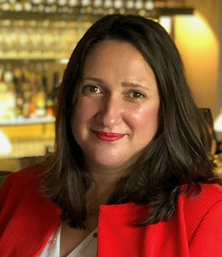
Beth Durham is Professional Standards Manager for Media & Communications at the College of Policing. Her experience leading major multi-agency responses includes Covid, flooding, disorder, aviation fatalities, severe weather and chemical incidents. Beth writes:
At the College of Policing, we know that clear, timely and accurate reporting during major incidents is vital, not just for public confidence, but for public safety.
This conversation couldn’t be more timely. We are consulting on new media relations guidance, designed to help forces communicate swiftly, effectively and transparently in fast-moving situations. The guidance emphasises openness, accuracy, and collaboration: principles that align closely with IPSO’s own guidance for responsible reporting of major incidents.
Major incidents involve real people – victims, families, and communities – who may be vulnerable to intrusion. Some welcome this, some don’t. I know first-hand the value of IPSO’s privacy notice service, which helps protect individuals from unnecessary harm while enabling legitimate public interest reporting. That balance matters during times of trauma.
We aim to build mutual understanding: how police can provide timely, factual updates but without compromising investigations or privacy – and how the press can report responsibly without fuelling speculation. We want to safeguard trust in both policing and journalism.
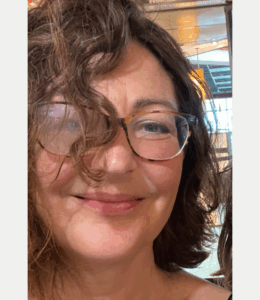
Rosalind Ereira is a campaigner for Survivors Against Terror. A former documentary maker, she has campaigned for political prisoners, organised mass demonstrations, and brings together organisations to effect change. She writes…
This summer, Survivors Against Terror released new media guidance for reporting on terror attacks. Our research has demonstrated that while reporting on terror attacks is undoubtedly in the public interest, media intrusion into the grief and lives of the injured and bereaved is endemic, with serious impacts on victims and survivors.
We know that no journalist or editor wants to compound the impact of attacks on bereaved families or survivors and have therefore developed guidance for journalists, editors and broadcasters which will support them in reporting on terrorism while avoiding causing further harm.
The guidance largely mirrors existing codes, but aims to draw together the provisions which are most relevant to terror attacks, and to supplement these with additional recommendations.
We would like to see this guidance used in colleges and universities so that these principles are embedded in the training of journalists; in workplaces so that editors can ensure that best practice is observed; and by journalists when considering how best to cover the story they’re working on.
The guidance has been created in collaboration with media experts, lawyers, counter terror policing, and survivors of attacks.